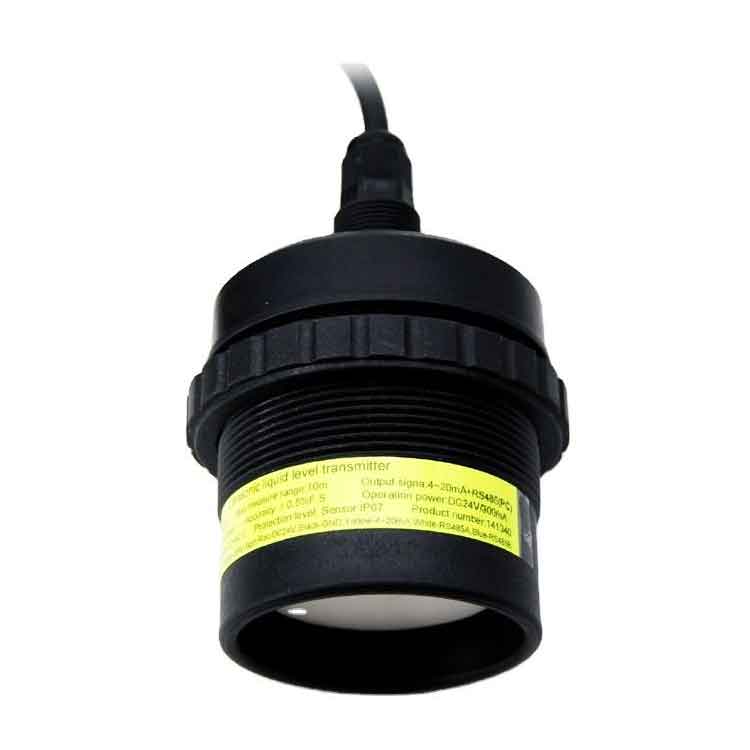
As an instrument capable of accurately measuring the height of liquid levels, the liquid level sensor has extremely wide applications in various fields such as industrial production, daily life, and scientific research. From industries like petrochemicals, electric power, and metallurgy, to daily life scenarios including water supply and drainage systems and water tank level monitoring, and further to liquid level control in scientific research experiments, liquid level sensors play an indispensable role. They can feedback liquid level information in real-time and accurately, providing crucial data support for the stable operation and effective control of systems. With the continuous development and innovation of technology, the types of liquid level sensors are becoming increasingly abundant. Different types of liquid level sensors have significant differences in terms of working principles, performance characteristics, applicable scenarios, and so on. A deep understanding of these types and their differences is crucial for the rational selection and correct use of liquid level sensors, ensuring that they can exert optimal performance in various application scenarios.
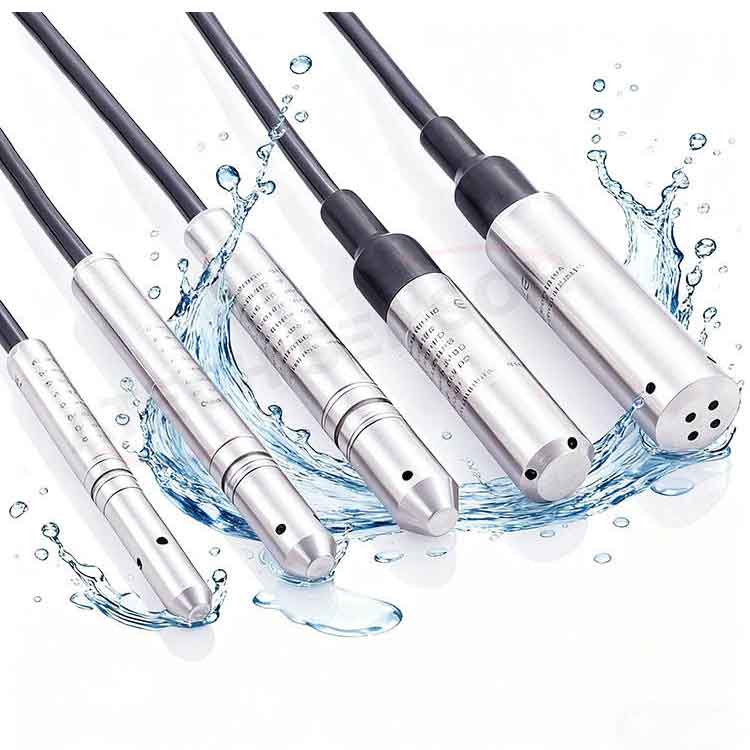
Ⅰ.Static pressure liquid level sensor
ⅰ. Working Principle
The static pressure liquid level sensor works based on the principle that the static pressure of a liquid is proportional to the liquid level height. Its interior is mainly composed of a pressure-sensitive element and a conversion circuit. When the sensor is immersed to a certain depth in the measured liquid, the static pressure generated by the liquid acts on the pressure-sensitive element, which converts the pressure signal into an electrical signal. According to the formula 𝑃=ρ𝑔ℎ (where 𝑃 is the liquid static pressure, ρ is the liquid density, 𝑔 is the gravitational acceleration, and ℎ is the liquid level height), by measuring the pressure 𝑃, and with the known liquid density ρ and gravitational acceleration 𝑔, the liquid level height ℎ can be accurately calculated.
ⅱ.Performance Characteristics
This type of liquid level sensor features a simple structure and easy installation. It can be directly immersed in the liquid for measurement without requiring complex mounting brackets. It offers relatively high measurement precision, which meets the accuracy requirements for liquid level measurement in most industrial and civil applications, typically achieving an accuracy of ±0.5% FS (Full Scale). Meanwhile, it demonstrates strong adaptability to the measured media and can be used for liquid level measurement in various liquids, such as clean water, wastewater, and oils. However, the measurement accuracy of the hydrostatic level sensor is affected by changes in liquid density; if the density of the measured liquid changes and the sensor is not calibrated accordingly, measurement errors will occur. Furthermore, in some special high-temperature or high-pressure environments, its performance may be affected to a certain extent.
Ⅱ. Capacitive liquid level sensor
ⅰ. Working Principle
Capacitive liquid level sensors utilize the property that capacitance is related to changes in liquid level. They consist of two or more electrodes. When the liquid level changes, the dielectric constant between the electrodes also changes accordingly, leading to a variation in capacitance. For example, in a capacitive liquid level sensor composed of a cylindrical inner electrode and a coaxial cylindrical outer electrode, when the liquid is located between the electrodes, it acts as a dielectric, and its dielectric constant differs from that of air. As the liquid level rises or falls, the proportion of regions with different dielectric constants between the electrodes changes, which in turn causes the capacitance to vary. By measuring the change in capacitance and processing it through the corresponding conversion circuit, the height information of the liquid level can be obtained.
ⅱ.Performance Characteristics
Capacitive liquid level sensors offer high sensitivity, capable of accurately detecting minute changes in liquid levels. They have a wide measurement range, making them suitable for detecting liquid levels at different heights. These sensors are relatively insensitive to the conductivity, corrosiveness, and other properties of liquids, allowing them to be used for measuring a variety of liquid types, including some corrosive chemical liquids. However, capacitive liquid level sensors have relatively complex circuitry and higher costs. Additionally, they are susceptible to interference from surrounding environmental factors, such as electromagnetic interference and temperature variations, which may affect measurement accuracy. Therefore, corresponding shielding and compensation measures are required to improve their stability.
Ultrasonic Level Sensor
Ⅲ.Ultrasonic Level Sensor
ⅰ. Working Principle
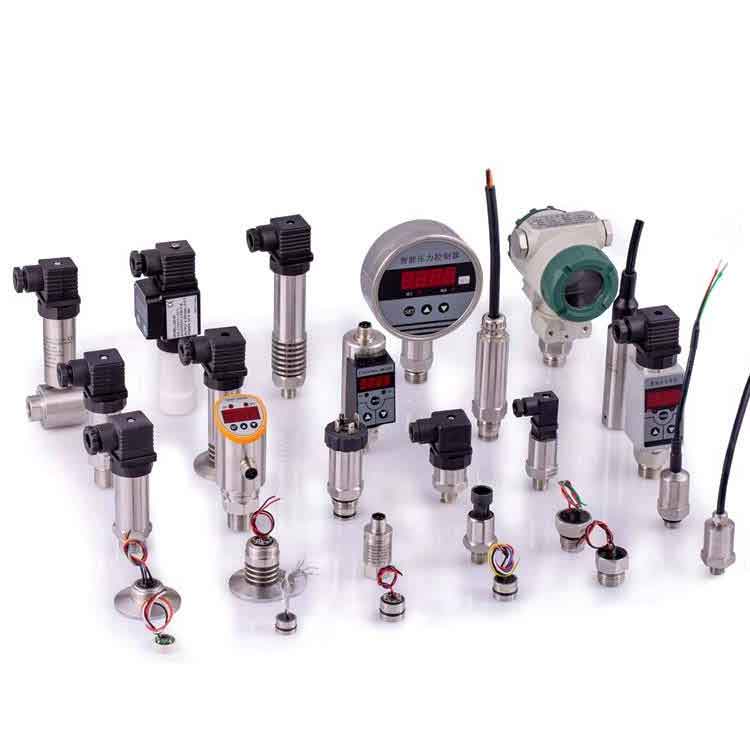
Ultrasonic level sensors measure liquid levels by emitting ultrasonic waves and receiving the signals reflected from the liquid surface. The ultrasonic transducer inside the sensor generates ultrasonic waves under electrical excitation, which propagate through the air at a certain speed. When the waves encounter the liquid surface, they are reflected back and received by the transducer. Based on the time interval 𝑡 between transmission and reception, as well as the propagation speed 𝑣 of ultrasonic waves in air, the liquid level height ℎ can be calculated using the formula ℎ = 1/2 𝑣𝑡. Since the propagation speed of ultrasonic waves in air is affected by factors such as temperature, temperature compensation is generally required to improve measurement accuracy.
ⅱ.Performance Characteristics
Ultrasonic level sensors offer the advantage of non-contact measurement, avoiding direct contact with the liquid being measured. This eliminates issues such as corrosion and contamination that can arise from contact with the liquid, making them suitable for measuring the liquid level of corrosive, toxic, or highly viscous liquids. They provide relatively high measurement accuracy, reaching up to ±0.2% FS or even higher. The measurement range is also wide, making them applicable for high-level liquid measurement in large storage tanks, deep wells, and other similar scenarios. However, ultrasonic level sensors have certain requirements for the installation environment. There should not be too many obstacles in the surroundings, as this can interfere with the transmission and reflection of ultrasonic waves, leading to measurement errors. In environments with strong air currents or a significant amount of foam, their measurement accuracy can also be greatly affected.