LORA (Long Range Radio) is a Low-Power Wide-Area Network (LPWAN) technology specifically designed for long-distance communication of Internet of Things (IoT) devices. Its long-distance transmission and low-power consumption characteristics have led to its wide application in fields such as smart cities, environmental monitoring, and agriculture.
I. Introduction to LORA
LORA is a wireless communication technology that adopts Spread Spectrum modulation technology. It improves transmission distance and anti-interference capability by expanding the bandwidth of signals. LORA can achieve long-distance data transmission with low power consumption, making it suitable for devices that require long-term stable operation, such as sensors and remote monitoring systems.
LORA operates in the ISM (Industrial, Scientific, and Medical) frequency bands. Common frequency bands include 868 MHz (Europe), 915 MHz (the United States), and 470 MHz (China). Its main advantages lie in ultra-long-distance communication capability, low power consumption characteristics, and strong signal anti-interference capability.
II. Key Parameters of LORA
1. Spreading Factor (SF)
The Spreading Factor (SF) determines the degree of signal spreading. The value of SF typically ranges from 7 to 12. A higher SF value can provide a longer communication distance and better anti-interference capability, but it will reduce the data transmission rate.
2. Signal Bandwidth (BW)
The signal bandwidth (BW) affects the transmission rate and anti-interference capability of LORA. The bandwidths supported by LORA are usually 125 kHz, 250 kHz, and 500 kHz. A larger bandwidth provides a higher data transmission rate but may increase interference to other signals.
3. Coding Rate (CR)
The Coding Rate (CR) is used to indicate the error correction capability of data. The coding rate range of LORA is from 4/5 to 4/8, where 4/5 means that 4 out of every 5 data bits are used for actual data, and the remaining are used for error correction. A higher coding rate can provide stronger error correction capability but will reduce the effective data transmission rate.
III. Basic Configuration and Transmission Methods
1) Basic configuration parameters of the module
The configuration parameters of the LORA module have a significant impact on its performance and application scenarios. The following are some key configuration parameters and their explanations:
2) Transmission method
1. Transparent Transmission
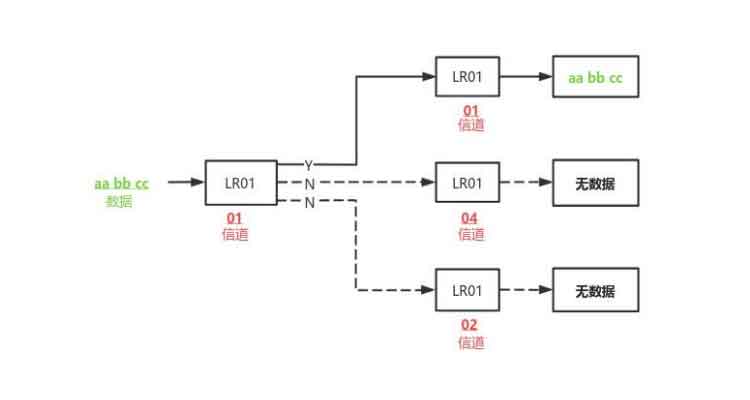
2. Point-to-Point Transmission
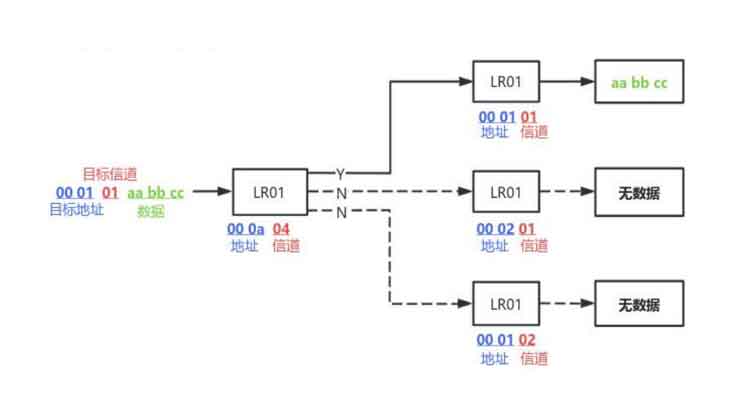
3. Broadcast Transmission
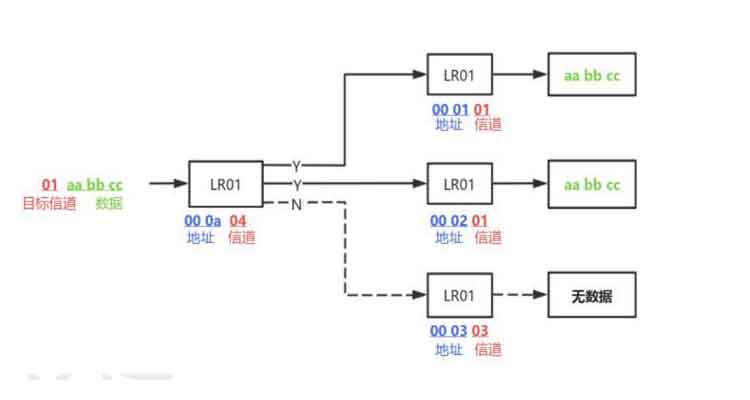 IV. Conclusion
LORA technology excels in Internet of Things (IoT) applications due to its long-range communication, low power consumption, and flexible configuration options. By understanding LORA's core parameters, transmission modes, and module configurations, one can effectively optimize device communication performance to meet various application requirements. Whether it's transparent transmission, point-to-point transmission, or broadcast transmission, LORA provides reliable solutions, driving the development and application of the Internet of Things.