An irrigation moisture sensor is a smart tool to measure soil water. They can guide irrigation and farming to help with irrigation at the right time and amount. They are also called soil moisture sensors and are widely used in agriculture.
These sensors simplify watering. They prevent over- and under-watering, promoting healthy growth and conserving water. Irrigation consumes 70% of the world's fresh water, so efficient water management is increasingly important.
Irrigators can reduce water use by incorporating soil water content sensors in irrigation. Soil moisture sensors are commonly used in farming, gardens, greenhouses, and lawns, and are an essential part of smart irrigation.
What Do Soil Irrigation Sensors Measure?
Irrigation soil moisture sensors can measure:
- Volumetric water content (VWC): This shows how much water is in the soil. This is the most commonly measured.
- Soil water potential: This is an indicator of how difficult it is for plant roots to extract water from the soil.
- Soil temperature: Some probes measure both temperature and moisture for crop management.
- Electrical conductivity: This shows the amount of nutrients or salt in soil water.
- Soil dielectric constant: This is measured by capacitance and TDR sensors to work out moisture.
Most sensors used in agriculture will combine two or more of these measures. This provides an overall assessment of soil condition for irrigation.
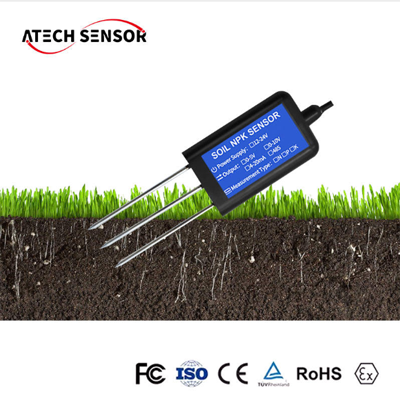
How Does a Moisture Sensor Work?
The working principle of an irrigation moisture sensor depends on its type. However, the general process is similar for most sensors.
A moisture sensor is installed in the soil at the root zone. It measures moisture and transmits the data to a controller or data logger. The controller sends a signal to turn irrigation on or off.
There are various types of sensors for measuring soil moisture:
- Capacitance sensors measure soil dielectric constant using electric fields.
- Tensiometers use negative pressure or suction to measure how tightly water is held in soil.
- Resistive sensors measure the electrical conductivity through wet soils.
- TDR uses electromagnetic waves to measure moisture by timing how long it takes for the waves to return.
The data give a real-time picture. This helps to plan effective irrigation for crop production.
Types of Soil Moisture Sensors
These are the most commonly used soil moisture sensors for irrigation.
1. Capacitance Soil Moisture Sensor
The capacitance sensor is a commonly used soil moisture sensor for irrigation. It has two electrodes in the soil. The electrodes produce an electric field. The sensor calculates the soil's dielectric permittivity to determine soil water content.
Some of the capacitance soil moisture sensors' features are:
- High accuracy with fast response time
- Works well in most common soil types
- Low maintenance and easy to deploy
- Compatible with data loggers and smart controllers
These sensors are widely used in drip irrigation systems. They can be used in agriculture, gardens, and greenhouses.
2. Tensiometer (Soil Water Tension Sensor)
A tensiometer measures the soil water potential. It has a porous ceramic tip in the soil. The tip draws water from the soil as it dries, and a suction is created. Suction is expressed in kilopascals (kPa).
Tensiometers has the following characteristics
- Reflects actual plant water stress conditions accurately
- Performs well in fine-textured or clay soils
- Requires regular water refilling to function correctly
- Ideal for use in shallow-rooted plants such as vegetables
Tensiometers are often used in vegetable gardens and vineyards. They are one of the earliest types of soil moisture sensors.
3. Resistive Soil Moisture Sensor
Resistive sensor measures resistance between two metal probes. Soil with high water content has a lower resistance. That means the lower the resistance the wetter the soil.
Resistive sensors are:
- Relatively inexpensive (as low as $5 per unit)
- Simple to install and easy to use
- Lower accuracy compared to capacitance sensors
- Susceptible to rust and degradation
Resistive sensors are suitable for small gardens and greenhouses. They are not suitable for commercial farming.
4. Time Domain Reflectometry (TDR) Sensor
TDR sensor sends electromagnetic pulses through metal probes inserted into soil. Time taken for these pulses to travel through soil is used to determine volumetric water content of soil. The faster the travel time the drier the soil and vice versa.
TDR sensors have the following features:
- Very high accuracy suitable for professional use
- Works reliably in almost all soil types
- Can measure moisture at multiple depths simultaneously
- Higher cost ranging from $200 to $1000 or more
TDR sensors are used by research institutions, precision agriculture farms and water management agencies. They are considered the most reliable among all irrigation sensor types.
5. Neutron Moisture Meter
A neutron moisture meter uses nuclear technology to measure soil water content. It releases fast neutrons into the soil. Water slows these neutrons down. The count of slowed neutrons then indicates the moisture level in the soil.
Key features of neutron moisture meters include:
- Extremely accurate with deep soil measurement capability
- Requires trained operators and special safety precautions
- Very expensive and not practical for small farm operations
- Mainly used in government and scientific research settings
Soil Moisture Sensor Comparison Table
Sensor Type | Accuracy | Cost Range | Best Use Case |
Capacitance | High | $30 to $300 | Farms and greenhouses |
Tensiometer | Medium | $20 to $150 | Vegetable crops and vineyards |
Resistive | Low | $5 to $30 | Home gardens and hobby use |
TDR Sensor | Very High | $200 to $1000 | Research and precision agriculture |
Neutron Meter | Extremely High | $3000 and above | Scientific and government projects |
How to Select the Right Soil Moisture Sensor for Irrigation?
Selecting smart irrigation sensor systems depends on several considerations. Here are a few tips to get you started.
✐ Consider Your Crop Type
Crops with shallow roots, like lettuce, require sensors closer to the surface. Crops with deeper roots, such as corn and sugarcane, require sensors located deeper.
✐ Think About Your Soil Type
Clay soils store water better than sands. Capacitance and TDR sensors can be used in most soils. Tensiometers are best suited to fine textured or clayey soils.
✐ Choose Based on Your Budget
● For small home gardens: A resistive moisture sensor is the most cost-effective sensor.
● For large commercial farms: A capacitance or TDR sensor is more accurate.
● For scientific research: A TDR or neutron sensor is most informative and accurate.
✐ Look for Data Output Options
Some sensors transmit RS485 or Modbus data. Others have WiFi or cellular connections. Make sure sensor can communicate with your irrigation controller or smart farming systems.
✐ Check Installation and Maintenance Needs
Tensiometers have to be filled with water. Other sensors like capacitance sensors are virtually maintenance free. Choose a sensor according to your team's expertise.
✐ Consider Accuracy and Calibration Requirements
If irrigation is critical to your crops accuracy is key. Cheaper sensors may need more frequent calibrations. Ask for accuracy specifications from the manufacturer.
How to Select the Right Soil Moisture Sensor for Irrigation?
Selecting smart irrigation sensor systems depends on several considerations. Here are a few tips to get you started.
✔ Consider Your Crop Type
Different crops require different amounts of water. Crops with shallow roots such as lettuce, require sensors near the surface. Crops with deep roots, such as corn or sugarcane, require sensors placed deeper.
✔ Think About Your Soil Type
Clay soils retain water longer than sandy soils. Capacitance and TDR sensors can be used in most soils. Tensiometers work best in fine-textured or clayey soils.
✔ Choose Based on Your Budget
- For small home gardens: A resistive moisture sensor is most affordable option.
- For larger commercial farms: A capacitance or TDR sensor is more accurate and reliable.
- For research: A TDR or neutron sensor is the most accurate and informative.
✔ Look for Data Output Options
Some sensors send data via RS485 or Modbus protocols. Others use WiFi or cellular connectivity. Ensure that sensor can connect with your irrigation controller or smart farming system.
✔ Check Installation and Maintenance Needs
Some sensors like tensiometers need regular water refilling. Some sensors such as capacitance sensors are practically maintenance free. Select a sensor that fits the skill set of your team.
✔ Consider Accuracy and Calibration Requirements
If irrigation is vital for your crops go for the sensor with high accuracy. Lower cost sensors may require more frequent calibration. Look for manufacturer accuracy information when purchasing.
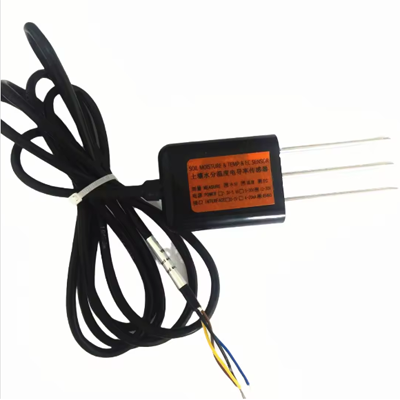
Why Atech Sensor Is the Best Choice for Soil Moisture Monitoring?
Atech Sensor is leading provider of professional irrigation moisture sensors which is trusted by farmers and engineers across the world. Atech Sensor has a full line of soil moisture sensors for irrigation such as capacitance and multi-parameter soil Sensor.. Their sensors are built with high-quality materials and imported sensing elements for better stability and accuracy.
Here are a few reasons why Atech Sensor is preferred by professionals worldwide:
- Multi-parameter measurement: Atech sensors measure soil moisture, temperature and electrical conductivity.
- Industrial-grade build: Their sensors are waterproof and dustproof. They are built to withstand outdoor conditions.
- Wide communication options: They have RS485 Modbus RTU and analog or SDI-12 communication outputs that allow easy integration.
- Great accuracy: Atech sensors have an accuracy on soil moisture content of plus or minus 2% to 3% VWC for most soils.
- Lightweight:Atech sensors are small and easy to install, even for small teams with limited expertise.
- Great value: Atech Sensor offers industrial quality at an affordable price for both large and small farms.
Atech Sensor offers sensors that suit rice paddies, greenhouses, and even sports fields.
FAQs
Q1: Which is best soil moisture sensor for drip irrigation?
Best sensor for drip irrigation is capacitance based soil moisture sensor. It is very accurate and can be used in different types of soils. It can be easily connected with drip irrigation controlling systems.
Q2: How deep should I install an irrigation moisture sensor?
It depends on the root zone of the crop. For vegetables, install the sensor at depths of 10 to 20 cm. If you have deep root zone such as with fruit trees or corn the sensor should be 30 to 60 cm depth or deeper.
Q3: Can soil moisture sensors work in all weather conditions?
Soil moisture sensors for irrigation are made for outdoors. They are waterproof and withstand hot and cold. Make sure you check the IP rating and temperature range. IP67 or IP68 rating sensors are good for harsh conditions.
Conclusion
A moisture sensor for irrigation is a wise investment for your farm or garden. It conserves water, helps your crop grow, and saves you money in the long run. There are many soil moisture sensors on the market, but in most cases it is sufficient to clearly understand the purpose for which the sensor is required, then select a model that best suits your specific application, whether it’s for a garden, farm, greenhouse, or lawn.
A good sensor should simply give you accurate readings and help you water your plants more efficiently without overthinking the specifications. With reputable companies like Atech Sensor, you can easily get the best quality, value and accuracy for your irrigation system.
 |
8 in 1 LORA LORAWAN Moisture Temperature EC Salinity PH Integrated Soil Sensor | View Products |