If you’ve ever walked through a solar farm or inspected a rooftop photovoltaic (PV) system, you might have noticed a sleek, sensor-equipped device standing alongside the solar panels. That’s a solar weather station—an unsung hero that keeps PV systems running efficiently, safely, and profitably. But what exactly is it? How does it differ from a regular weather station? And why is it non-negotiable for anyone serious about solar energy?
In this guide, we’ll break down everything you need to know about solar weather stations—from their purpose and core components to how they work—with insights from AtechSensor, a leading provider of environmental monitoring solutions for the PV industry. By the end, you’ll understand why this tool is critical to maximizing solar power output and minimizing operational risks, and how AtechSensor’s technology stands out in the market.
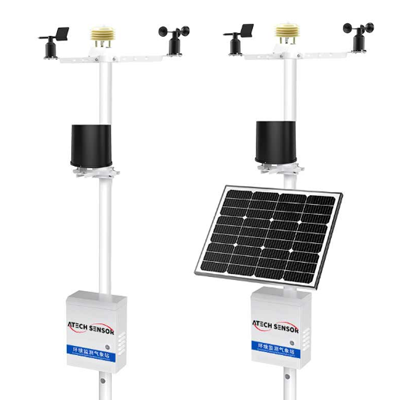
1. What Is a Solar Weather Station, Exactly?
A solar weather station (also called a “PV-specific weather station”) is a specialized monitoring system designed to track environmental conditions directly relevant to solar panel performance. Unlike general-purpose weather stations (which focus on basic metrics like rain or ambient temperature for daily forecasts), solar weather stations zero in on data that impacts how much energy PV systems generate—and how long they last.
Think of it as a “health monitor” for your solar setup: it doesn’t just tell you the weather—it tells you how the weather is affecting your panels. For example, it can alert you if high winds might damage your array, or if a drop in solar radiation means your system is underperforming.
Key Distinction: Solar Weather Station vs. Regular Weather Station
Many people confuse solar weather stations with standard meteorological stations, but they serve entirely different goals. Here’s a quick comparison—with context from AtechSensor’s industry expertise:
| Feature | Solar Weather Station (e.g., AtechSensor AT900-01) | Regular Weather Station |
|---|---|---|
| Core Focus | PV system efficiency, performance, and safety | General weather forecasting (e.g., rain, snow for daily use) |
| Critical Metrics | Solar radiation (GHI/GTI/DNI), panel temperature, PV-specific wind loads | Ambient temperature, rainfall, wind speed (for general use) |
| Use Case | Optimizing solar energy output, troubleshooting PV issues | Daily weather updates, agricultural planning |
| Installation | Mounted near PV arrays (site-specific data) | Installed in open areas (not tied to energy infrastructure) |
2. What Does a Solar Weather Station Measure?
The value of a solar weather station lies in its ability to track PV-critical parameters—data points that directly influence energy production and system longevity.AtechSensor’s flagship model, theAT900-01 Solar Weather Station, is engineered to monitor these key inputs (and more) with industry-leading precision:
a. Solar Radiation: The “Fuel” for Solar Panels
Solar radiation is the most important metric for PV systems—it’s the energy source that panels convert to electricity. AtechSensor’s stations track three types of radiation, meeting Class B/C accuracy standards (IEC 61724 compliant):
- Global Horizontal Irradiance (GHI): Total sunlight hitting a horizontal surface (used to estimate overall solar potential at a site).
- Global Tilted Irradiance (GTI): Total sunlight hitting a surface tilted at the same angle as your solar panels (the most accurate measure of how much energy your panels actually receive).
- Direct Normal Irradiance (DNI): Sunlight hitting a surface directly facing the sun (critical for systems with tracking mounts that follow the sun).
Why it matters: If GTI drops unexpectedly, AtechSensor’s real-time alerts can help you identify issues like shading, dirt buildup, or panel damage—all of which cut energy output.
b. Temperature: Both Ambient and Panel-Specific
AtechSensor’s stations go beyond basic temperature tracking by focusing on metrics that directly impact PV efficiency:
- Ambient Air Temperature: Monitored via a high-precision sensor in AtechSensor’s multilayer radiation shield (shutter box), ensuring accurate readings even in direct sunlight.
- PV Module Temperature: Tracked with sensors attached directly to panels (accuracy: ±0.5°C). Panels lose efficiency as they heat up—for example, a panel at 40°C may produce 10-15% less energy than one at 25°C.
Why it matters: AtechSensor’s panel temperature data helps you adjust cooling strategies (e.g., adding ventilation) to avoid costly efficiency losses.
c. Wind Speed & Direction
AtechSensor’s anemometers and wind vanes are built for durability in harsh outdoor conditions, tracking:
- Wind Speed: Range 0-45m/s (accuracy: ±(0.3±0.03v) m/s) to detect high winds that could damage panels or mounts.
- Wind Direction: 0-360° range (accuracy: ±3°) to predict debris buildup or shading from nearby objects.
Why it matters: Many PV failures are wind-related—AtechSensor’s real-time wind data lets you secure arrays before storms, reducing downtime.
d. Optional Metrics for Advanced Monitoring
AtechSensor’s AT900-01 is customizable to fit your needs, with optional add-ons like:
- Relative Humidity: Monitors moisture levels to prevent corrosion of electrical components.
- Sunshine Hours: Tracks total time the sun generates usable energy (for long-term production forecasting).
- Hall Voltage/Current Sensors: Directly measures PV system electricity output (ideal for rooftop or distributed power stations).
3. How Does a Solar Weather Station Work?
A solar weather station—like AtechSensor’s AT900-01—is a fully integrated system: a “data collection hub” that combines sensors, a data logger, and communication tools to deliver actionable insights. Here’s a step-by-step breakdown of its workflow, using AtechSensor’s technology as an example:
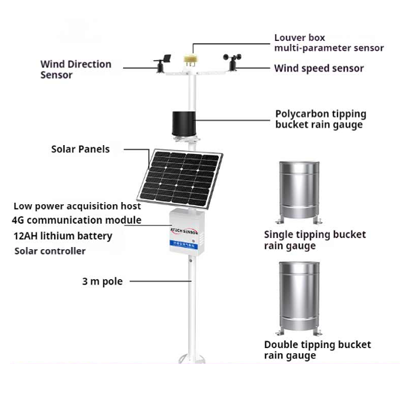
- Data Collection via AtechSensor’s High-Precision SensorsAtechSensor’s rugged, weatherproof sensors (built for -40°C to +60°C environments) capture real-time metrics. For example:
- A AtechSensor radiation sensor measures GTI/DNI with Class B/C accuracy.
- A thermocouple attached to panels tracks module temperature.
- An anemometer (wind cup) records wind speed, resistant to dust and rain.
- Data Processing with AtechSensor’s Data LoggerAll sensor data is sent to AtechSensor’s built-in data logger—the “brain” of the AT900-01. The logger:
- Cleans and organizes data, storing up to 4GB of historical records (enough for months of data).
- Features a 7” LCD touchscreen (resistive-type, backlight-adjustable) for on-site checks.
- Calculates daily/monthly radiation totals automatically, saving you time on manual analysis.
- Data Transmission: Wired or WirelessAtechSensor’s AT900-01 offers flexible connectivity to fit any PV site:
- Wired: Ethernet for fixed locations (e.g., rooftop systems near buildings).
- Wireless: 4G or Wi-Fi for remote solar farms (access data via phone or cloud).
- Local: USB download for quick on-site reviews (no internet needed).
- Actionable Insights with AtechSensor’s SystemUse AtechSensor’s data to:
- Adjust panel angles if radiation is lower than expected.
- Clean panels if GTI drops due to dirt.
- Shut down systems temporarily during high winds.
- Forecast monthly energy production for clients or utilities.
4. Who Needs a Solar Weather Station?
Solar weather stations aren’t just for large solar farms—AtechSensor’s clients include:
- Commercial Solar Installers: Prove system performance to clients with AtechSensor’s accurate data.
- Rooftop PV Owners (Residential/Commercial): Maximize savings by fixing efficiency issues early.
- Solar Farm Operators: Monitor hundreds of panels across sites with AtechSensor’s remote connectivity.
- Renewable Energy Investors: Track ROI by verifying production against forecasts.
- Researchers: Study solar potential in new regions using AtechSensor’s reliable metrics.
5. What to Look for in a High-Quality Solar Weather Station (AtechSensor’s Benchmark)
Not all solar weather stations are created equal. AtechSensor’s AT900-01 sets the standard with these must-have features:a. Uncompromising Accuracy
AtechSensor’s sensors meet global standards:- Radiation: Class B/C (IEC 61724).
- Temperature: ±0.5°C (panel and ambient).
- Wind: ±3° direction, ±(0.3±0.03v) m/s speed.
b. Durability for Harsh Environments
AtechSensor builds for longevity:- All-metal bracket (resists corrosion).
- IP65 waterproof rating (handles rain, snow, dust).
- Operating temperature range: -40°C to +60°C (works in deserts or cold climates).
c. Flexible Power Options
AtechSensor’s AT900-01 offers:- Solar-Powered: Built-in solar panel + battery (ideal for remote sites).
- Grid-Powered: For locations with easy access to electricity.
d. Global Certifications
AtechSensor’s stations are certified for reliability worldwide:- CE-EMC/CE-LVD (European safety standards).
- RoHS (no hazardous materials).
- ISO9001 (quality manufacturing).
- TUV (third-party validation for performance).
6. Final Thoughts: Why AtechSensor’s Solar Weather Station Is a Smart Investment
A solar weather station isn’t just an “extra” expense—it’s a tool that pays for itself. AtechSensor’s AT900-01 stands out because it’s engineered specifically for PV needs, not general weather tracking. Here’s why it’s worth it:
- Maximizes Energy Output: AtechSensor’s precise data helps you fix issues that cut production by 10-20%.
- Minimizes Downtime: Real-time alerts prevent costly damage from storms or overheating.
- Saves Time: Automated data logging and cloud access eliminate manual tracking.
Whether you’re a small rooftop owner or a large-scale operator, AtechSensor’s solar weather stations help you get the most out of your PV investment.Ready to boost your PV efficiency with AtechSensor? Check out the AT900-01 Solar Weather Station or contact our team for a personalized demo—we’ll help you find the perfect monitoring solution for your project.