Humans have been calculating wind speed for over a century thanks to John Thomas Romney Robinson, who invented the cup anemometer in 1846. Modern cup anemometers use the same principle of drag forces to calculate wind speed, but their designs have become much more sophisticated. Electronics have taken over, and refined mechanics allow them to produce reliable results.
Why use a cup anemometer when there are lots of other options? To understand why cup anemometers still have a wide range of applications, we must dive deep into their applications, differences with different options, working mechanisms, and setup requirements. Cup anemometers produce reliable results, so let's start with where they are most suitable.
Purpose and Applications: Why Measure Wind Speed?
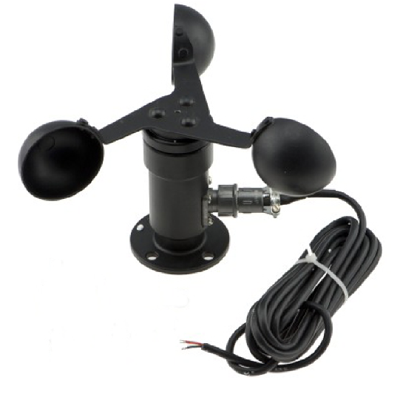
The purpose of a cup anemometer is to provide wind velocity. It uses a three or four-cup configuration to convert the wind energy into rotational shaft energy. The rotational speed is equivalent to the wind speed. But why measure wind speed in the first place? Let's analyze some of its applications to grasp the purpose of a cup anemometer fully:
♦ Meteorology and Weather Forecasting
Predicting the weather is impossible without wind speed data. Wind direction and speed are the fundamental inputs for meteorology. A cup anemometer can provide the data in real-time and record it for later analysis.
♦ Wind Energy and Turbine Control
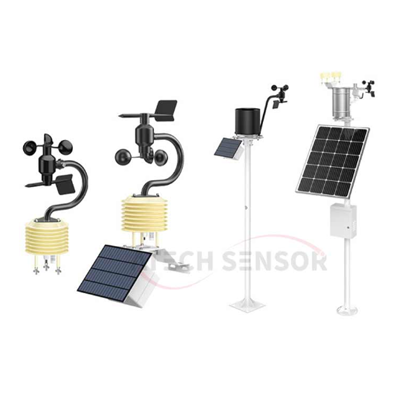
Power remains the essential element driving the modern world. Green energy technologies like turbines require real-time wind speed measurements to adjust their blade pitch and turbine yaw. It keeps them operating safely and optimizes maximum energy output efficiency.
♦ Aviation and Navigation
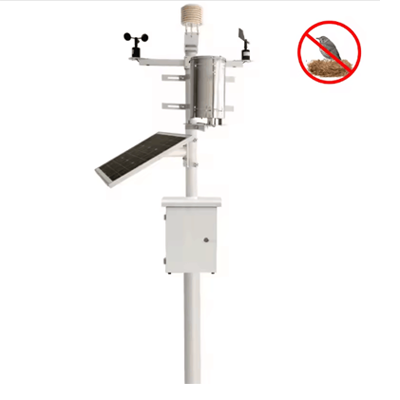
Aircraft rely on air to take off or perform a landing. Wind speeds can significantly influence its ascent and descent. The control or airport traffic control towers (ATCT) closely monitor the airspeed and direction to allow landing or take-off. They utilize cup anemometers to monitor wind speed.
♦ Industrial Applications and Safety
Monitoring air conditions is vital in industries with gaseous discharge. Effluent discharge from the exhaust of stacks and chimneys needs to be well-directed and mixed to ensure compliance with safety and environmental standards. Such industries will have meteorological towers that monitor wind speed using cup anemometers at different heights.
♦ Agricultural Applications
Smart farming is becoming popular, and using a cup anemometer is essential for monitoring wind conditions. These data will help maximize spray efficiency in orchards, improve irrigation strategies for vegetable farms, allow the strategic placement of windbreaks in vineyards, and boost pollination effectiveness in berry farms.
Cup Anemometer vs. Other Wind Meters: Understanding the Differences
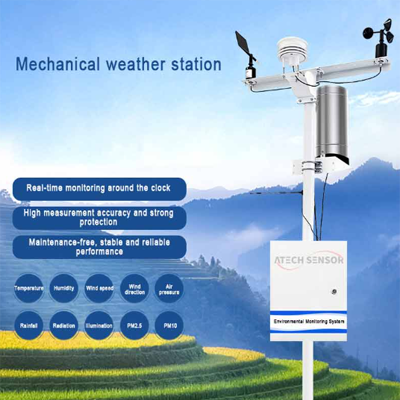
While cup anemometers are great for wind measurement, other options serve a similar purpose. However, the cup anemometer has advantages that others do not provide. Let's analyze and compare all the available wind meters.
Anemometer Type | Applications | Design Features | Accuracy | Cost | Operation Principle |
Cup | Meteorology, agriculture, wind energy, environmental monitoring | 3-4 rotating hemispherical cups on horizontal arms | ±2–5% (depends on quality) | Low | Wind pushes cups, and rotation speed is proportional to wind speed |
Vane | HVAC systems, essential outdoor monitoring, wind direction tracking | Propeller (or fan) with tail vane | ±2–3% | Low to Moderate | Airflow spins the propeller; the direction shown by the tail |
Hot-Wire | Laboratory experiments, low-speed airflow testing | Low gauge heated wire; no moving parts | ±1–2% (in controlled settings) | Moderate to High | The air cools the heated wire; resistance change is used to calculate the speed |
Laser Doppler | Research, high-precision scientific studies, aerospace | Complex setup with laser and optics; no contact with airflow | ±0.5% or better | Very High | Measures Doppler shift of laser light scattered by airborne particles |
Thermal | Indoor airflow studies, low-speed ventilation measurements | Compact, heated element-based; no moving parts | ±2–3% at low speeds | Moderate | Detects the cooling effect of airflow on a heated element |
Ultrasonic | Meteorology, aviation, automated weather stations | Sensor pair with no moving parts; durable and digital | ±1–2% | High | Measures time-of-flight difference of ultrasonic pulses between transducers |
How Cup Anemometer Works: The Science of Rotation and Signal Conversion
Let's examine the working mechanism of the cup anemometer in more detail. The earliest designs involved physically counting the number of rotations to check wind speed. The design has significantly improved, unveiling its modern form. We will discuss the latest designs that can be manufactured using plastic, stainless steel, or aluminum. Here are its key aspects:
● Rotation Mechanism:
The rotation mechanism converts the wind's kinetic energy into rotational energy. It executes the conversion using a three- or four-cup configuration.
- Aerodynamics: The cups are aerodynamically designed in a concave-like structure. The open side creates the drag necessary to produce the force.
- Unidirectional Rotation: At first glance, the cups are arranged so that all cups experience wind drag. However, the open cup side experiences more drag than the concave end, causing it to rotate in only one direction.
- Wind Speed and Rotation: Every cup anemometer has a different friction factor depending on the material and internal support system. It needs to be calibrated against wind speed. After calibration, the speed at which the shaft rotates is directly proportional to the wind speed.
● Signal Conversion:
The next step is for the cup anemometer to convert the rotations into a signal. There are various implementations for the conversion. Let begin! Hall-effect sensors or optical sensors
- Rotation to Electricity: There are two types of implementation: one can use hall-effect sensors, and the other is an optical sensor. Each generates a pulse of electric signal. The hall effect uses electromagnetism, while the optical sensor uses light to count turns.
- Pulse and Frequency: The number of times the electric pulse is generated and the frequency at which it appears is the direct representation of wind speed. However, it may not be directly proportional.
● Data Acquisition and Display:
After generating a sound signal, data must be collected for visualization and further processing. A computational device is needed to convert the signal into readable and observable values.
- Signal to Display: Some cup anemometers have a digital display that can provide real-time information by converting the electrical signal into readable text.
- Data Loggers and Interface Devices: Cup anemometers can be connected to data loggers that offer storage space for over a year. These interface devices can also convert analog signals into digital data for computer processing. Atech AT160-02 is also a great example.
- Software for Data Visualization and Analysis: the digital data from the cup anemometer data logger can be interpreted using the software. They can store, analyze, and create graphical results for better data visualization.
Setting Up Your Cup Anemometer: A Step-by-Step Guide
Now that we know how the cup anemometer converts wind energy into graphical data results, we can explore its setup method.
● Required Devices and Components:
To complete the setup of a cup anemometer, we will need the following devices and components:
- Cup Anemometer: A cup anemometer from a reputable brand.
- Mounting Hardware: Most brands do not provide mounting hardware, so consider a stand or fixture.
- Cables and Connectors: High-end cup anemometers will feature an RS232, RS485, or USB interface. Buy the appropriate cable length that is compatible with the interface.
- Data logger or Interface Device: Manufacturers sometimes provide a proprietary data logger and interface device containing a microprocessor for rapid data storage and results. Some also provide a direct digital output that a computer can recognize with an R485 or USB connection.
- Power supply (if applicable): If the system is standalone with display and data storage, you may need a power supply. Otherwise, the Hall-type cup anemometer produces digital signals that computers can detect.
- Computer or Display Unit: Finally, you will need a computer or a display to interpret the results.
● Physical Setup for Accurate Results:
When you have all the necessary components, it's time to connect and mount all the devices in a manner that produces accurate results.
- Location: Find a clear and unobstructed space that does not restrict wind, such as a building, tree, or other object.
- Mounting: Use proper tools and mounting mechanism. Most anemometers come with a flanged connection with mounting holes.
- Cable Management: Ensure the cables are compatible with the site's conditions. The cable must have a protection shield to remain operational in sunlight, humidity, wind, and dust.
- Calibration and Testing: To keep your setup running efficiently, calibrate and test it at a fixed frequency.
Conclusion: Harnessing Wind Data with Precision
Using a cup anemometer is still relevant owing to its budget-friendly design and reliability. Its relatively easy-to-set-up assembly and wide-scale applications make it an ideal choice for wind measurement. Compared to other types, the cup anemometer provides ±2–5% (depending on quality).
A cup anemometer can come in different materials: plastic, stainless steel, or aluminum. It may come with a display or an RS232, RS485, or USB interface. As a user, you must ensure flawless setup to ensure interpretable output. However, to get the most accurate results, you need a product from a trustworthy manufacturer. Consider Atech wind cup anemometer, which come in a variety of materials. They also feature data logging and display facilities. Give the Atech wind sensor website a visit!
FAQ: Addressing Common Questions
1) Is a cup anemometer accurate for measuring wind speed?
Cup anemometers are highly accurate, with uncertainty below 1%. Their wide-scale application also indicates their reliable results. Their simplicity and cost-effective design make them feasible. However, they do need calibration and maintenance for persistent output.
2) What are the limitations of a cup anemometer?
The cup anemometer design makes it inaccurate for low wind velocities. Similarly, for higher velocities and turbulent conditions, cup anemometers can provide a lower value than actual conditions. The rotatory parts make them prone to aging. However, in the case of meteorological and agricultural use, these limits do not pose any significant challenge.
3) How often should a cup anemometer be calibrated?
Cup anemometers are calibrated in wind tunnels or against a well-calibrated instrument. Manufacturers provide the calibration requirements for their sensors. However, checking the instrument for recalibration every 6 months is considered a good practice. Most manufacturers mention recalibration requirements every 3-5 years.
4) Can a cup anemometer measure wind direction?
The part of the cup anemometer that consists of three to four cups cannot measure the wind direction. However, the anemometer assembly often includes a vane that provides the wind direction. Ultrasonic anemometers can detect wind direction and provide velocity, but they are expensive.
5) What are the benefits of using a cup anemometer?
Cup anemometers are inexpensive compared to other wind-measuring instruments. They are durable and have a simple design for setup. They are capable of working with ±1% accuracy and provide reliable results for more than 3 to 5 years, depending on regular maintenance and calibration activities.