In high-altitude mountainous areas, offshore islands, and northern wind farms, traditional mechanical wind speed and direction instruments are prone to icing jamming, component wear, and inaccurate data. Frequent maintenance greatly increases project costs. To tackle industry pain points, Atech has launched the Anti-Icing Ultrasonic Wind Speed & Direction Sensor. Adopting the ultrasonic transit-time difference method for stable wind measurement, it serves as an excellent upgrade alternative to mechanical wind measuring equipment.
The anti-icing ultrasonic wind speed & direction sensor operates on the proven ultrasonic transit-time difference principle. The propagation speed of sound waves in air overlaps with airflow velocity: sound travels faster downwind and slower upwind. Equipped with multi-channel probes that transmit and receive ultrasonic signals bidirectionally, the sensor calculates the propagation time difference. Built-in algorithms eliminate temperature interference on sound velocity to output accurate wind speed and direction data. Without any rotating components, it requires no regular maintenance or on-site calibration and enables long-term stable all-weather operation, fundamentally avoiding inherent defects such as jamming and wear of mechanical instruments.
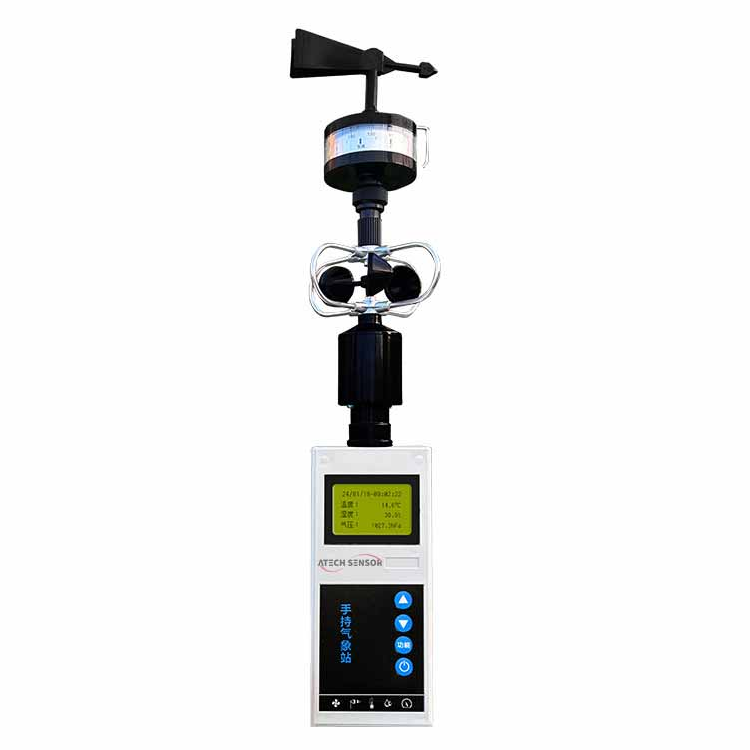
The anti-icing ultrasonic wind speed & direction sensor incorporates multiple optimized designs to adapt to various harsh working conditions. It features an innovative integrated aluminum alloy housing with exquisite craftsmanship, outstanding robustness and corrosion resistance. The all-solid structure delivers high mechanical strength, excellent waterproof and weather resistance, and extended service life. Free from start-up wind speed restrictions and measurement angle dead zones, it collects wind speed and direction data simultaneously, boasting wide measuring range, high precision, low power consumption and strong anti-electromagnetic interference capability. Ultrasonic probes and reflector covers are fitted with high-power automatic heating assemblies, which activate automatically under low temperatures to melt ice and frost, ensuring continuous sensor operation under extreme cold and freezing rain.
Boasting a compact structure and integrated mounting design, the anti-icing ultrasonic wind speed & direction sensor facilitates on-site deployment and transportation. It can form an offline monitoring system matched with solar panels and storage batteries, supporting wireless remote data transmission, making it suitable for unattended areas such as alpine regions and islands. Meanwhile, it supports customizable wind speed units, output frequency and output formats, flexibly connecting to various monitoring platforms to meet diversified intelligent project demands.
Benefiting from stable and reliable performance, the anti-icing ultrasonic wind speed & direction sensor covers a wide range of applications, including wind power generation, meteorological monitoring, urban environmental monitoring, bridge & tunnel engineering, marine vessels, aviation airports, subway systems and mining operations. Whether for long-term field meteorological observation or safety monitoring at industrial sites, it can continuously deliver accurate wind field data and support the intelligent upgrading of environmental monitoring across all industries.