What is wind speed sensor?
What is a Wind Direction Sensor?
How Does a Wind Speed Sensor Work?
How Does a Wind Direction Sensor Work?
How Does an Ultrasonic Wind Speed and Direction Sensor Work?
How to Install Wind Speed Sensors and Tips?
Wind Sensor Application Scenarios
About Atech Wind Sensor
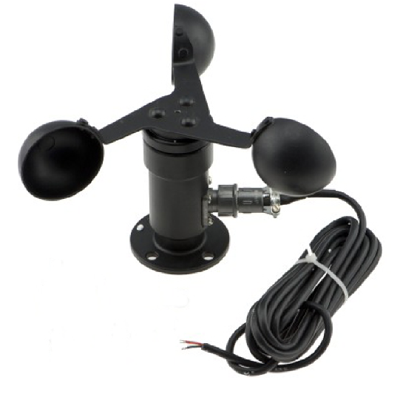
The wind speed sensor is a professional meteorological instrument used to measure the horizontal speed of wind. It uses a traditional three wind cups wind speed sensor structure that is highly durable.
In addition, thanks to its smooth bearing system, it starts smoothly and ensures accurate data collection. The built-in signal processing unit in the cup can output the corresponding wind speed signal according to the user's demand, which can be widely used in the fields of meteorology, ocean, environment, airport, harbor, laboratory, industry and agriculture, and transportation.
What is a Wind Speed Sensor?
wind speed sensors are devices designed to continually gauge both wind speed and wind volume (calculated as wind speed multiplied by the cross-sectional area). A prevalent type of wind speed sensor is the wind cup anemometer, believed to have been initially developed by Robinson. The measurement component consists of three or four hemispherical wind cups, evenly arranged and affixed in one direction on a rotating support fixed vertically to the ground.
What is a Wind Direction Sensor?
Wind direction sensors are engineered instruments that determine the direction from which the wind is blowing. Utilizing technologies such as vane sensors and windsocks, they provide essential data for applications like weather forecasting and aviation.
What is Ultrasonic wind sensor?
Ultrasonic wind sensor is an instrument that uses ultrasonic technology to measure wind speed and direction.
Ultrasonic wind speed and direction sensor can widely used in weather station, environmental monitoring, aerospace, navigation and other fields .It's accuracy, fast response and high reliability.
Ultrasonic wind speed and direction meter is a more advanced instrument for measuring wind speed and direction. Because it well overcomes the inherent defects of mechanical anemometers, it can work normally in all-weather and for a long time, and is more and more widely used.
How Does a Wind Speed Sensor Work?
Wind speed sensors operate on principles such as cup anemometry. Picture small cups exposed to the wind—when they rotate, the sensor measures the rotational speed. This speed is then converted into electrical signals, offering accurate wind speed measurements.
The wind speed sensor is a professional meteorological instrument used to measure the horizontal speed of wind. It uses a traditional three wind cups wind speed sensor structure that is highly durable. In addition, thanks to its smooth bearing system, it starts smoothly and ensures accurate data collection. The built-in signal processing unit in the cup can output the corresponding wind speed signal according to the user's demand, which can be widely used in the fields of meteorology, ocean, environment, airport, harbor, laboratory, industry and agriculture, and transportation.
How Does a Wind Direction Sensor Work?
Wind direction sensors, often using vane technology, determine wind direction by measuring the orientation of a vane in relation to the incoming wind. This angular information is then translated into accurate directional data.
The wind direction sensor detects and senses the wind direction information of the outside world by the rotation of the wind direction arrow, and transmits it to the coaxial code disk, and outputs a physical device corresponding to the wind direction related value; its main body adopts the mechanical structure of the wind vane, and when the wind blows towards the tail of the wind vane, the arrow of the wind vane will point to the direction of the wind blowing over. In order to maintain sensitivity to direction, different internal mechanisms are also used to give direction to the wind speed sensor.
How ultrasonic wind sensors work?
How to measuring wind speed?
Ultrasonic wind speed sensors typically utilize two pairs of ultrasonic transmitters and receivers mounted on either side of the sensor. As the wind passes over the sensor, it changes the path and speed of the ultrasonic waves.
By measuring the difference in propagation time of the ultrasonic waves from the transmitter to the receiver, the wind speed can be calculated.
How to measuring wind direction?
Measuring wind direction is accomplished by comparing the difference in propagation time between two pairs of ultrasonic transmitters and receivers. Due to the effect of wind, the propagation speed of ultrasonic waves varies in the downwind and upwind directions. The wind direction is determined by comparing the difference in propagation time in these two directions.
Advantages:
Precision: Ultrasonic wind sensors provide highly accurate wind speed and direction measurements, minimizing errors in data collection.
Durability: With no moving parts, ultrasonic sensors experience less wear and tear, resulting in a longer lifespan.
Low Maintenance: The absence of mechanical components reduces maintenance needs, making ultrasonic sensors a cost-effective choice.
How to Install Wind Speed Sensors and Tips?
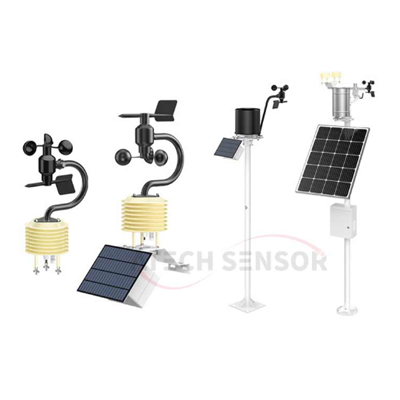
Adopt flange mounting, threaded flange connection to make the wind speed sensor lower fittings firmly fixed in the flange, chassis Ø65mm, in the circumference of Ø47.1mm open four are Ø6mm mounting holes, the use of bolts will be tightly fixed in the bracket, so that the whole set of instruments, to maintain in the optimal level, to ensure that the accuracy of the wind data, the flange connection is easy to use, and can withstand the pressure of the larger.
Step 1: Choose an Optimal Location
Mount the sensor at a height above potential obstructions, such as trees or buildings.
Ensure the sensor is in an open area to capture unobstructed wind flow.
Step 2: Sensor Orientation
Align the sensor correctly with the prevailing wind direction.
Avoid placing it in the shadow of nearby structures that might cause turbulence.
Step 3: Secure Mounting
Utilize sturdy mounting hardware to secure the sensor in place.
Regularly check for any loose connections and tighten if necessary.
Step 4: Calibration
Follow the manufacturer's instructions for calibration.
Regularly calibrate the sensor to maintain accuracy.
This video will show you how to connect the wind speed sensor and digital controller
Two prohibitions:
1, it is prohibited to use the wind speed sensor in the flammable gas environment
2、It is prohibited to place the wind speed sensor probe in combustible gas.
Seven Don'ts:
1,Don't disassemble or modify the wind speed sensor;.
2, Don't expose the probe and anemometer body in the rain.
3, Don't touch the internal sensor part of the probe;.
4, Don't place the wind speed sensor in high temperature, high humidity, dusty and direct sunlight.
5, Don't use volatile liquids to wipe the wind speed sensor.
6, Don't fall or heavy pressure on the wind speed sensor.
7, Don't touch the sensor part of the probe when the wind speed sensor is energized.
Wind Sensor Application Scenarios
Wind speed sensors play a crucial role in crane tower operations, ensuring safe lifting and movement by providing real-time wind data.Monitoring wind speeds helps prevent accidents and ensures efficient crane operations in construction sites.
Wind direction sensors find applications in various fields:
Meteorology for precise weather forecasting.
Aviation for airport operations and safety.
Construction, where knowledge of wind patterns ensures safe working conditions.

Conclusion:
Understanding the nuances of wind sensors and their applications is essential for making informed decisions in various fields. By following proper installation procedures and leveraging the advantages of advanced technologies like ultrasonic sensors, users can harness the power of accurate wind data for enhanced safety and efficiency.
About ATECH Wind Sensor
ATECH is a manufacturer of wind sensors with over 55 years of experience, specializing in wind speed sensors, wind direction sensors and ultrasonic wind sensors, as well as wind speed and wind direction sensors using the wind cup principle, the ultrasonic principle or the hot wire principle, which are widely used in large-scale machinery, wind power generation, harbors and other scenarios. Anemometers include cup anemometers, vane anemometers, etc. Among them, cup anemometers are the most commonly used anemometers in weather stations.
ATECH wind speed sensor and wind direction sensor are made of high-strength alloy materials with coated surfaces, which are waterproof and corrosion-resistant to ensure long-term stable and reliable operation in harsh industrial environments.
Please contact us for a quote for any wind speed sensor, wind direction sensor requirements.