In the field of high-pressure measurement, reliability and accuracy are the key factors to ensuring system safety and stability. The high-pressure pressure sensor was developed to meet these needs. It adopts a glass micro-fusion process, where the elastic body is sintered with the pressure interface at 500 ℃, eliminating traditional “O”-rings and weld seams, thereby fundamentally removing leakage risks. This integrated structure not only enhances mechanical strength but also significantly improves corrosion resistance, allowing the sensor to operate stably in long-term high-pressure and harsh environments. With an ultimate pressure resistance of up to 10,000 bar, it provides solid security in ultra-high-pressure conditions.
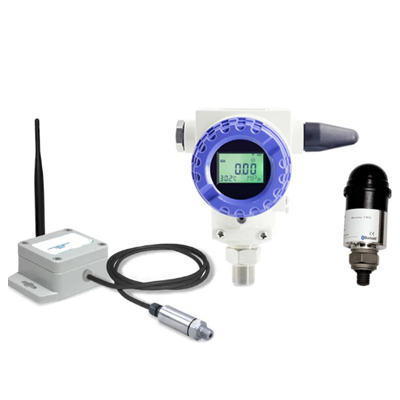
One of its major advantages is digital temperature compensation technology, which ensures stable output and high sensitivity within a wide operating temperature range of -40 ℃ to +85 ℃. Accuracy reaches ±0.3%FS or ±0.5%FS, with long-term stability better than ±0.1%FS/year. This reduces the need for frequent calibration, lowering operation and maintenance costs. The sensor provides output signals of 10 mV/V to 15 mV/V, meeting diverse system data acquisition requirements.
In engineering applications, high-pressure sensors are widely used in high-pressure hydraulic and pneumatic control systems, high-pressure water jetting and cleaning equipment, as well as high-pressure sealed containers. In hydraulic and pneumatic systems, they monitor real-time pressure changes, helping control systems adjust parameters precisely to prevent overpressure failures or safety accidents. In water jetting and cleaning operations, the sensors ensure stable jetting pressure, improving efficiency while reducing equipment wear. In sealed containers and other high-pressure processes, the sensors can withstand 150%FS overload and up to 300%FS burst pressure, greatly enhancing system safety.
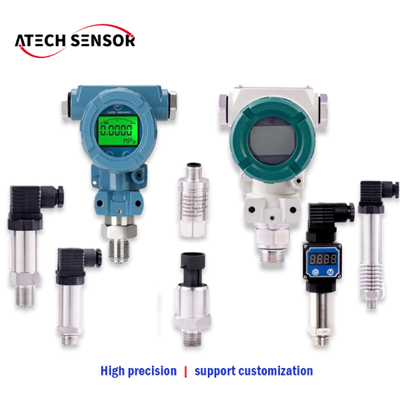
With strong resistance to impact and vibration (withstanding up to 100g shocks), they remain stable during transport, installation, and long-term operation. The IP65 protection level, combined with 17-4PH stainless steel probe and 304 stainless steel housing, ensures resistance to humidity, dust, and corrosive media, enabling reliable performance in harsh environments. Multiple customizable pressure interfaces and electrical connections provide installation flexibility across projects.
Thanks to its robust integrated design, excellent accuracy and long-term stability, as well as adaptability to extreme conditions, the high-pressure pressure sensor has gained wide recognition in industrial automation, high-pressure process control, and special equipment manufacturing. It not only delivers precise pressure data but also ensures safe and reliable system operation.