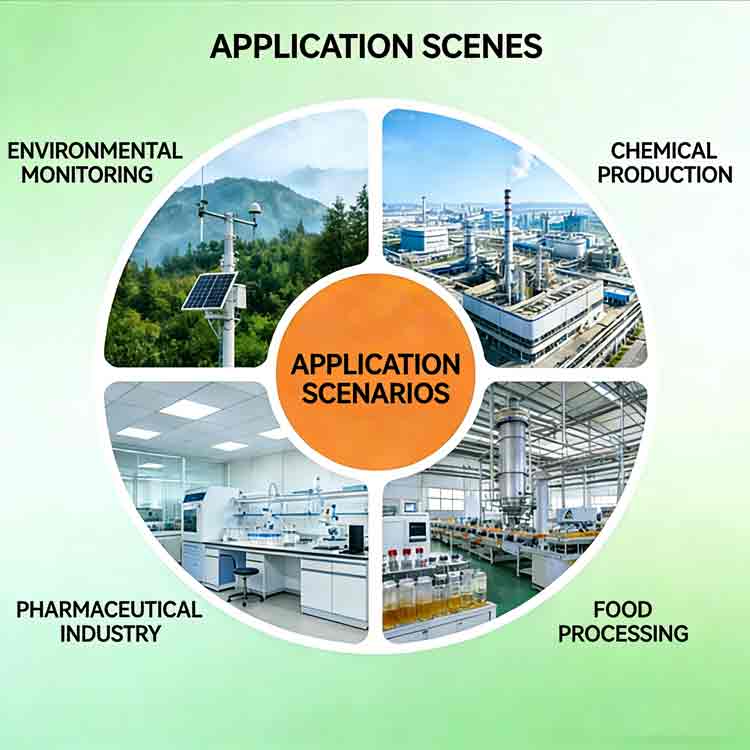
As a tool for measuring water level height, the water level gauge is widely applied in water conservancy, environmental protection, municipal engineering, agriculture and other fields. With the continuous advancement of technology, the types of water level gauges have become increasingly diverse, among which the submersible water level gauge has emerged as a highly focused product in the market due to its unique advantages. This paper will give a detailed account of the selection and application of submersible water level gauges from the perspectives of both beginners and experts.
I. Basic Working Principle of Submersible Water Level Gauges
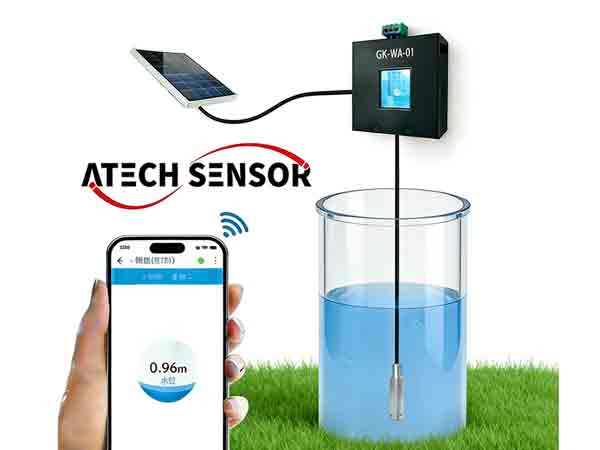
- Based on the hydrostatic pressure principle: the liquid depth is proportional to the pressure it bears, and the sensor calculates the water level height by measuring the water pressure.
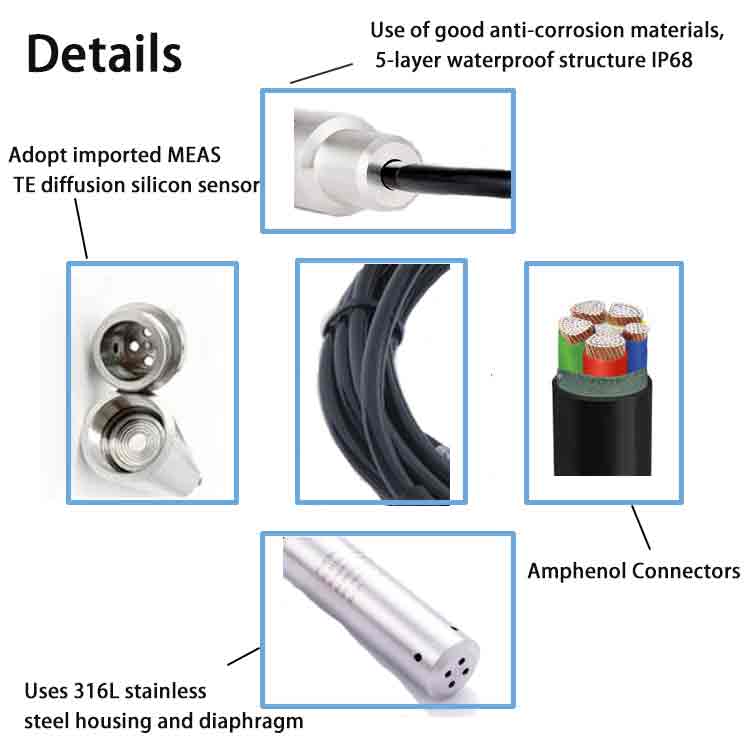
- Core Components: A high-precision diffused silicon pressure sensor integrated with a temperature compensation algorithm, enabling millimeter-level accuracy (e.g., 0.01 mm resolution).
- Output Signals: Typically 4–20mA current or RS485 digital signals, which can be directly connected to PLC or cloud platforms.
II. Core Advantages: Why Choose It?
- Ultra-simple Installation: Put directly into water without complex brackets, suitable for deep wells, water tanks, river courses and other scenarios.
- Strong Environmental Adaptability: Stainless steel sealed housing (IP68 protection rating) with corrosion and high temperature resistance, applicable to complex media such as fresh water, seawater and sewage.
- High Precision & Stability: Built-in temperature compensation and algorithm correction for reliable data output, supporting long-term unattended monitoring.
- Low Power Consumption & Wireless Expandability :Can be equipped with solar power supply and wireless data collectors to realize automated monitoring in outdoor areas without commercial power supply.
III. Key Selection Tips: Avoid Pitfalls
- Range Selection: Select according to the maximum water depth to prevent sensor damage caused by over-range operation.
- Material Matching: For corrosive environments (e.g., acid-alkali wastewater), opt for sensors made of 316L stainless steel or Hastelloy.
- Accuracy Requirements:For scientific research or precision control, select a precision of ±0.05%FS or higher; for general industrial applications, select ±0.1%FS.
- Output Mode: Select RS485 or 4–20mA for remote monitoring; choose models with an LCD display for local readouts.
IV. Application Scenarios:
- Water Conservancy Projects: Real-time water level monitoring of reservoirs, river courses and canals, supporting flood control and early warning.
- Environmental Protection & Municipal Engineering: Monitoring of sewage treatment tanks, rainwater manholes and urban waterlogging.
- Industrial Sector: Level monitoring for cooling water circulation tanks, chemical storage tanks and mine sumps.
- Agriculture & Groundwater: Water level control of irrigation canals and long-term groundwater level observation.