In water quality management, pH value is the core parameter for measurement, and its stability and measurement accuracy are directly related to the operation of the entire system. AS100 smart pH sensor adopts the glass electrode method. The measuring part consists of a glass indicator electrode and a reference electrode. By measuring the potential difference of the working cell composed of the indicator electrode and the reference electrode in the solution, online monitoring of pH and temperature is achieved, and it is committed to providing users with more efficient, more accurate and more convenient water quality monitoring.
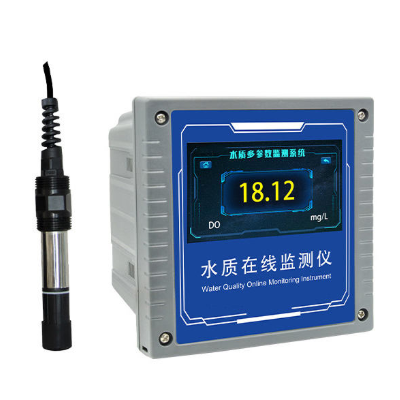
The smart pH sensor adopts the classic glass electrode method for pH detection. Through the working cell composed of the built-in indicator electrode and the reference electrode, the potential difference is sensed in the liquid in real time, thereby accurately reflecting the current pH value. The sensor has a built-in temperature compensation module, which can synchronously collect the solution temperature, automatically correct the measurement deviation affected by temperature, and achieve stable and reliable real-time data output in different environments and different liquids.
The design of this sensor takes into account various complex usage scenarios in industrial sites. The overall volume is compact and the structure is solid. The PPS engineering plastic shell with excellent corrosion resistance is selected. It has IP68 protection capability and is not afraid of harsh conditions such as moisture, immersion, scaling, etc., and can achieve long-term uninterrupted online monitoring. The NPT3/4 threaded interface design has strong adaptability, is easy to install and replace quickly, and is suitable for a variety of installation environments such as sewage pools, circulating water tanks, equipment pipelines, etc.
In terms of electrical performance, the smart pH sensor is equipped with a dual high-impedance differential amplifier circuit, which effectively improves the anti-interference ability and can still maintain the accuracy of measurement data in a strong electromagnetic environment. Its signal output form is flexible, supports standard 4~20mA current output and RS-485 digital communication interface, is compatible with Modbus-RTU protocol, and can be easily connected to PLC, DCS, SCADA and industrial Internet of Things systems to meet the needs of different users for remote control and data analysis.
The smart pH sensor is equipped with a fast-response measurement module with a pH accuracy of up to ±0.1, sensitive response and minimal drift. Even after long-term operation, it can still maintain excellent stability, significantly reducing maintenance frequency and operation and maintenance costs. The default cable length is 5 meters, which can be flexibly customized according to on-site needs to meet various installation locations and wiring requirements.
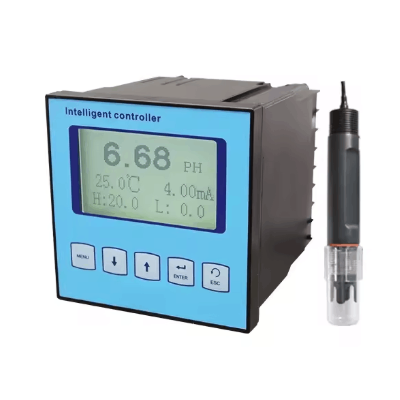
A wide range of applications is also one of the important advantages of smart pH sensors. Whether it is municipal domestic sewage treatment, industrial wastewater discharge monitoring, or aquaculture, cooling tower circulating water control, or even food and beverage processes and agricultural irrigation systems, this sensor can do it, helping users to achieve continuous monitoring of water quality acidity and alkalinity.