During a plant’s life, soil plays an important role. It provides and balances nutrients, water, air, and temperature for healthy growth.
Plants have different soil needs. These needs can change between species and at different growth stages. Because of this, there is no one-size-fits-all soil type for all plants. To manage these varying soil requirements, farmers often use soil sensors to monitor conditions.
These sensors come in different types. Each type measures specific soil parameters. Below are the main types of soil moisture sensors, temperature sensors, and pH sensors.
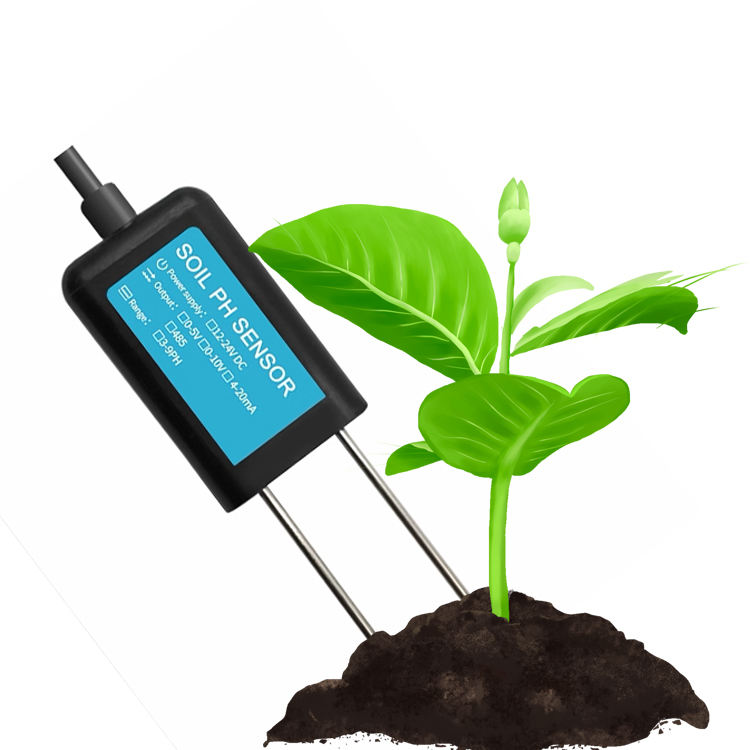
1.Soil pH Sensor
The soil pH sensor measures the pH level of the soil. This is important because it affects nutrient availability for plants. Also, pH influences microbial activity in the soil. Extreme pH levels can make it hard for plants to take up nutrients.
A soil pH sensor has a metal part and a switch. The metal part touches the soil.
This begins an oxidation reaction that creates an electrical current. The strength of this current depends on the soil’s pH value. A device then displays this value.
This type of sensor helps farmers and researchers check and change soil acidity or alkalinity. This optimizes nutrient availability and supports healthy plant growth.
2.Soil Moisture Sensor
Soil moisture sensors measure how much water is in the soil. This is important for managing soil well. Checking moisture levels helps save water and use it wisely. It also helps automate irrigation systems.
Soil properties can vary greatly, so moisture content can change in small areas. This means we need to measure it carefully.
Also called a soil water content sensor, this device often works with other sensors. These sensors can measure temperature, light, acidity, and salinity. It connects to computers to analyze data.
This system helps research how crops grow and keeps the right conditions for plants. Some advanced models also check temperature, humidity, and conductivity, along with moisture levels.
3.Soil Temperature Sensor
Soil temperature is an important factor for plant growth and development. It is one of the main things measured in soil tests. This is because it affects physical, chemical, and biochemical processes in the soil. Soil temperature greatly impacts crop growth cycles, including how plants look and work.
In farming, soil temperature data is very important. It helps farmers choose the best times to plant. This information tells them when to sow early or late.
Common ways to measure soil temperature include contact sensors, non-contact methods, and simulation models. These techniques give real-time data for ecological modeling and soil classification studies.
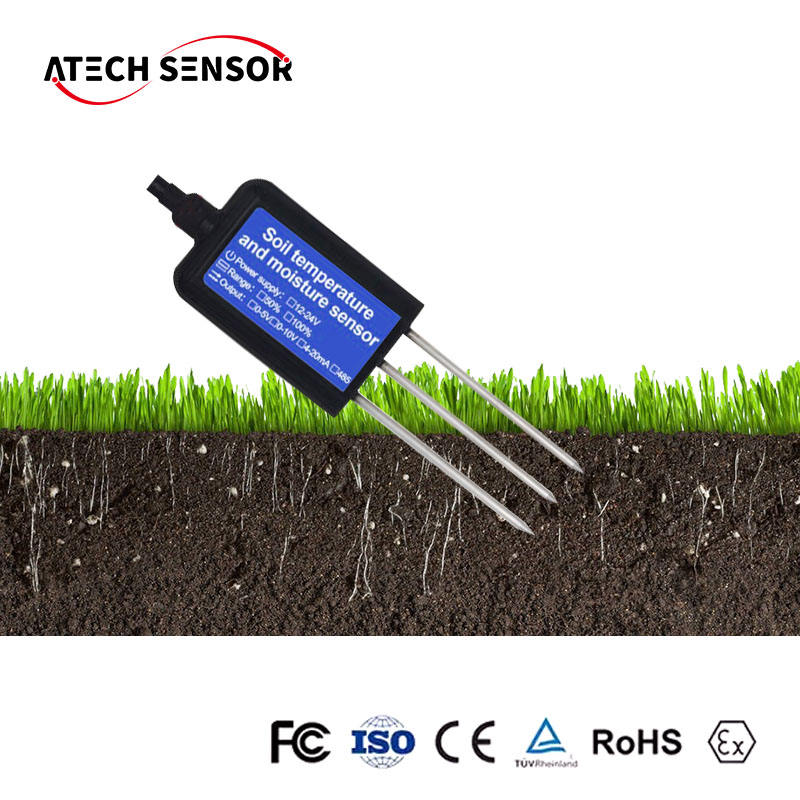
4.Soil Temperature and Humidity Sensor
This sensor combines soil temperature and moisture functions. It monitors these two important factors at the same time. This gives real-time insights into soil conditions.
This data helps us understand droughts and floods. It also shows how these conditions impact crop growth.
This technology helps move from traditional farming to modern agriculture. It supports the growth of “smart agriculture.”
Also, data from this sensor can help predict natural disasters like floods and droughts. Understanding these patterns allows for better planning to protect the environment and improve sustainability efforts.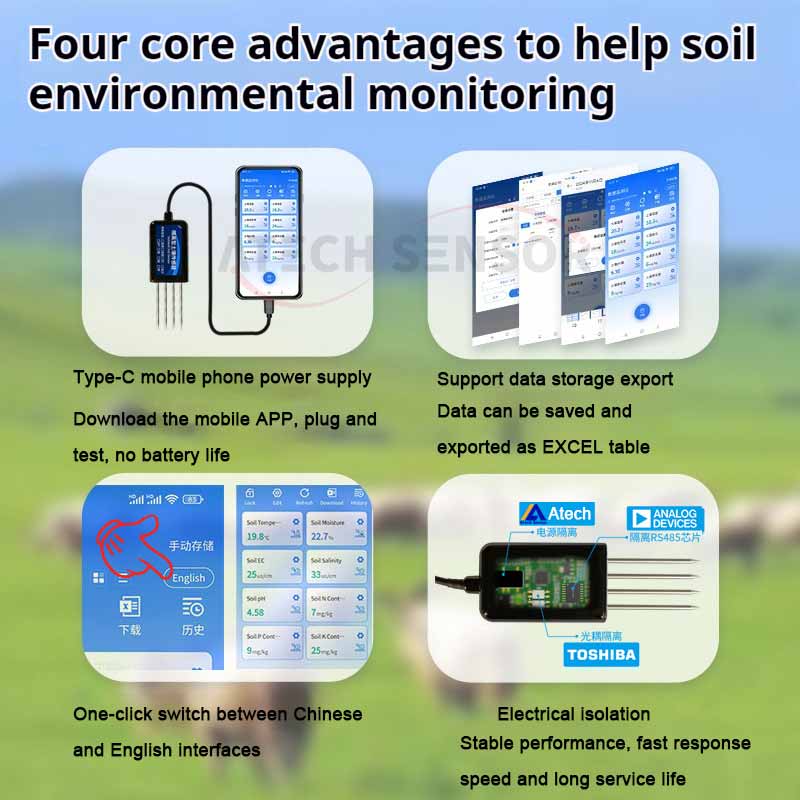
5.TDR-Based Tubular Soil Moisture Monitor
In addition to the standard sensors, there is a helpful tool called the tubular soil moisture monitor. It uses Time Domain Reflectometry (TDR) technology.
This device works on the principle of dielectric constant. It measures soil temperature and moisture in real time. It gives insights into moisture levels at different depths and shows salt buildup in the soil.
This technology allows for fast and precise monitoring of different factors in the soil. Smart agriculture, orchard management, nurseries, and smart cities use TDR monitors. These devices help enhance farming practices and support environmental efforts.